When the merger clock meets the HRSA clock
Every compliance officer who lived through the 2025 HRSA audit wave knows what happens when a hospital system merges before fixing its 340B registration. HRSA’s Office of Pharmacy Affairs (OPA) now requires newly merged hospitals and clinics to validate eligibility within 30 days of the legal transaction. Wait longer, and you risk being removed from the 340B database mid-quarter, taking all contract pharmacy claims with you. That’s not theory. Several merged FQHC networks in early 2026 vanished from eligibility lists for six weeks while HRSA verified new parent relationships and recertified off-site clinics.
In HRSA’s language, “organizational change” includes mergers, management agreements, or acquisitions that alter ownership or control, and that definition now stretches far. If a Disproportionate Share Hospital absorbs another provider and consolidates billing, both the parent and the acquired facility must re-register, even if service lines stay identical. HRSA audit teams now demand executed merger documents during validation to confirm control transfer dates. Too many covered entities still assume they can wait until annual recertification. That’s not acceptable in 2026. HRSA enforces timing now as part of eligibility itself.
Re-registration isn’t paperwork, it’s a compliance reset
HRSA treats post-merger re-registration as full reentry, not a box-checking update. Entities must reupload cost reports, Medicare DSH data, and child site documentation. OPA also asks for proof that each site bills Medicaid or uses the 340B Medicaid exclusion file correctly. If you fail to align Medicaid billing updates with re-registration, you create duplicate discount exposure, fast. HRSA’s post-2025 audits include multiple cases where EHR and billing lag after mergers caused diversion flags.
Timing creates the mess. Submit re-registration after legal integration but before HRSA signs off and you’ve built a compliance gap. Contract pharmacy partners technically lose authority to dispense under the old ID. Some large chains now pause 340B shipments until HRSA confirms the new record. Covered entities want continuity; pharmacies want chainwide legal cover. Both have a point, but only one has the audit risk.
When consolidation tests contract pharmacy continuity
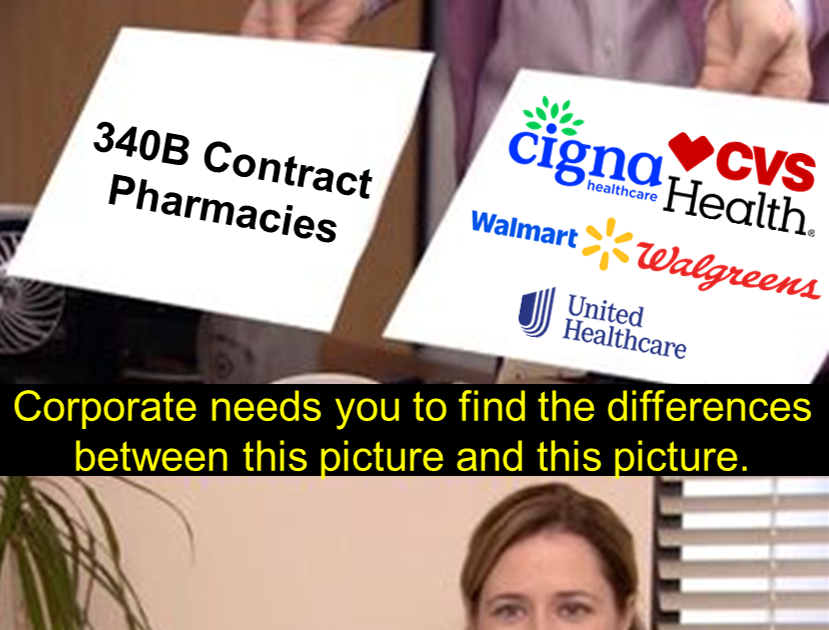
Contract pharmacy networks are HRSA’s latest flashpoint. The Drug Channels Institute’s 2026 analysis calls the 340B contract pharmacy market “a maturing industry dominated by big chains and PBMs”, slower growth, harsher compliance lines. PBM-owned pharmacies are done honoring contracts through organizational changes without revisiting ownership, NPI alignment, and split-billing accuracy. Once a merged system changes tax IDs or cost report data, those chains treat it as a new setup, not a continuation. HRSA’s enforcement posture agrees, but mid-integration disruptions often choke patient access when 340B replenishment halts.
And practically speaking, ESP data pulls and HRSA’s verified feed all hinge on the 340B ID. When that ID disappears, even briefly, manufacturers can reject every related contract pharmacy claim as ineligible. Documentation labeled “pending registration” won’t protect you in an audit. The only defensible approach is full transparency: coordinate in real time with HRSA, record every submission and approval, and share that log with pharmacies before resuming claims. Archive everything in your quarterly self-audit folder. You’ll need it.
Inside HRSA’s 2026 audit lens on eligibility
The biggest change in 2026 is how HRSA reads eligibility continuity. The old rulebook gave leeway when merging entities didn’t alter patient care or governance. That grace is gone. After repeated consolidation abuses, HRSA now uses data-matching algorithms to flag conflicting ownership in CMS cost reports. Two parent cost reports claiming the same location in the same period? You’re getting audited. It’s HRSA’s way of enforcing single control and making sure outpatient eligibility flows from the current entity, not its predecessor.
The operational fallout lands hard. Pharmacy directors must freeze child site additions until HRSA completes updates, even when internal teams are ready. Purchasing has to suspend split-billing feeds tied to outdated cost center tags. EHR analysts revalidate everything: prescribing logic, encounter data, the whole patient-definition chain. Miss one link and you’ve opened a diversion risk. Under the 2026 enforcement model, HRSA classifies diversions during reorganization as preventable failures. Not misunderstandings. Preventable. And liability sits squarely with the entity, not the pharmacy.
Here’s the part people skip: audit prep now needs a merger-readiness section. Before signing anything, know which 340B IDs are in play, which child sites share NPIs, how EHR access transitions, and what your patient definition looks like under the new parent. These aren’t abstract compliance theories; they’re the control points that decide whether your 340B program survives a merger or restarts from zero. Look, if you can’t answer those questions immediately, you’re not ready to close.
Why this enforcement shift actually matters
HRSA isn’t trying to expand authority, it’s just enforcing the statute inside modern consolidation reality. Health system mergers move too fast for an annual recertification model. The 2026 step-up signals that real-time eligibility verification is the only way to keep the 340B database honest. Covered entities that treat re-registration as clerical work are the ones losing contract pharmacy revenue for months. And in today’s market, where PBMs and chain pharmacies control most of the dispensing volume, per Drug Channels’ 2026 report, that loss doesn’t “recover later.” It just disappears.