A hospital can provide more uncompensated care, keep specialty patients in treatment, and still see its 340B eligibility metrics move in the wrong direction. That is no longer a theoretical problem. As MedLearn noted in its 2026 coverage of hospital eligibility, H.R. 1’s Medicaid changes and court decisions affecting the Supplemental Security Income fraction expose a weakness in the formula: a hospital can serve more financially vulnerable patients while its qualifying percentage falls.
The disconnect matters for audit readiness. Specialty pharmacy integration depends on a 340B program that is stable, well documented, and tied to a covered entity that remains eligible. When the eligibility foundation shifts, every downstream workflow becomes riskier. Dispensing logic, referral capture, inventory replenishment, and oversight of outside dispensing arrangements all rest on the same requirement: the covered entity must prove that the drug was purchased and used within program rules while preserving patient access.
Eligibility pressure starts upstream from dispensing
Too many 340B discussions about specialty pharmacy begin with split-billing logic or payer edits. That skips the issue HRSA would address first when eligibility itself is under strain.
MedLearn’s reporting explains why. Hospitals qualifying through the Disproportionate Share Hospital category generally need a Medicare DSH adjustment percentage above 11.75 percent. Rural referral centers and rural sole community hospitals need at least 8 percent, while Critical Access Hospitals have no DSH percentage threshold. HRSA generally applies those thresholds to the most recently filed Medicare cost report, so changes in coverage and utilization can affect eligibility after a delay. The timing is operationally difficult. A specialty pharmacy team can be performing well on access and adherence while the reimbursement and coverage environment quietly reshapes the cost-report inputs supporting 340B participation.
MedLearn also identifies a compliance trap program leaders cannot ignore: uninsured care does not increase either numerator in the DSH patient-percentage calculation simply because patients cannot pay. Put plainly, a hospital can absorb more financial burden without improving the metric that protects program eligibility.
That has direct consequences for specialty integration. When a hospital builds a referral pathway for infusion, oncology, transplant, or other high-cost therapies, it often assumes that stronger patient capture means greater program stability. Not always. If Medicaid coverage erodes and those patients remain in care as uninsured patients, the work of providing access expands while the eligibility math weakens.
What the recent legal and policy shifts change for audit posture
Policy and court decisions are shaping the current framework by changing how hospital need is measured, not just how drugs are dispensed.
MedLearn reports that H.R. 1, enacted as Public Law 119-21 on July 4, 2025, establishes work or community engagement requirements for certain Medicaid adults, generally beginning January 2027. It also requires six-month eligibility renewals for most expansion adults and restricts provider taxes and state-directed payments. The article’s point is straightforward and uncomfortable: when a patient loses Medicaid eligibility but continues receiving hospital care, formerly qualifying days can become uninsured days. The Medicaid fraction can fall even as uncompensated care rises.
That may not look like a dispensing issue, but it becomes one quickly. Specialty pharmacy integration is often justified as a patient-access strategy, and that rationale is legitimate. Access workflows, however, do not protect a covered entity from an eligibility methodology that does not treat uninsured care as a substitute for Medicaid status in the hospital DSH formula.
The same MedLearn piece highlights another pressure point. In April 2025, the U.S. Supreme Court’s Advocate Christ Medical Center v. Kennedy decision upheld counting Medicare patients in the SSI numerator only when they were entitled to an SSI cash payment for the hospitalization month. MedLearn also notes that the 2022 Empire Health decision and CMS Ruling 1498-R3 require counting Medicare-entitled days even when Part A does not pay, including exhausted-benefit days. These are eligibility mechanics, but they also determine compliance priorities. If an institution’s status depends on cost-report inputs that have become harder to sustain, leadership should stop treating specialty pharmacy buildout as a standalone project. It is a 340B governance issue.
The specialty pharmacy scenario administrators actually recognize
For a 340B administrator, the situation is familiar. A covered entity expands specialty capture because patients are leaving the health system with prescriptions that require close follow-up, prior authorization work, and ongoing refill coordination. Operational teams build new routing rules, tighten referral handoffs, and rely on pharmacy staff to keep patients on therapy. Access improves.
Then audit preparation begins, and the file room tells a different story.
The dispensing record may be clean, but the institution has not connected that dispense to a stable patient-definition process, a clearly governed replenishment model, and an eligibility position that leadership actively monitors. On paper, the specialty program looks efficient. Under audit logic, it looks fragmented. A specialty pharmacy is not compliant simply because it handles expensive drugs well. Compliance depends on whether the underlying 340B controls remain defensible from registration through dispensing and replenishment.
Bad internal habits surface here, too. Teams sometimes assume that because a patient is medically complex and financially stressed, the 340B answer should be yes. That is not how the program works. MedLearn’s analysis of the eligibility formula underscores that 340B operates on technical criteria, not good intentions. A hospital can plainly be serving safety-net functions while the formal measurement works against it.
Practical controls that matter when access and compliance collide
No single specialty pharmacy workflow fixes an eligibility problem. The answer is to stop running specialty pharmacy and 340B as separate conversations.
Program leaders should treat specialty integration as an audit-facing workflow. Map each handoff from the prescriber encounter through dispensing, then make sure the covered entity can explain how the dispense fits its 340B framework. Governance also has to extend upstream into cost-report awareness and hospital eligibility monitoring. MedLearn’s reporting makes clear that Medicaid churn and SSI-fraction rules can affect the institution before the pharmacy team sees the problem locally.
- Review specialty workflows against the covered entity’s current eligibility posture rather than last year’s assumptions.
- Match patient-capture processes to written 340B policies so operations and audit responses tell the same story.
- Escalate cost-report and payer-mix shifts to pharmacy leadership early; access gains do not offset weakening eligibility metrics.
- Document who owns oversight when specialty dispensing depends on outside partners or separate operational teams.
That last point is easy to miss. Specialty pharmacy integration often crosses departments that do not think like 340B auditors. Revenue cycle, case management, clinic leadership, and pharmacy operations may all touch the same patient path. If no one owns the full compliance narrative, the program starts depending on assumptions between handoffs. That is where audit findings begin.
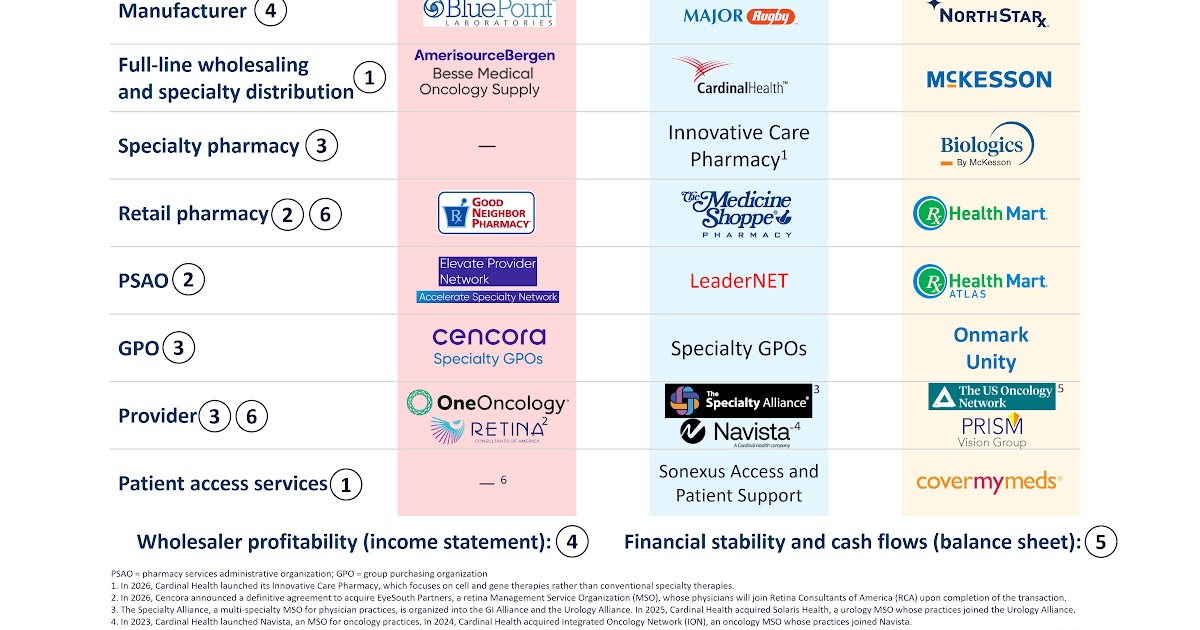
There is also a broader channel issue to keep in view. Drug Channels reported that the U.S. prescription drug market continues to expand and that the foundations of the drug channel are shifting. For 340B covered entities, specialty pharmacy integration is taking place in a market that is not becoming simpler. More complexity in distribution and specialty infrastructure creates more points where compliance oversight can fail without deliberate controls.
The safety-net purpose of 340B remains relevant, as MedLearn put it, but its measure of need deserves reconsideration. Until that changes, covered entities do not receive credit for the patients they intended to help. They are judged on whether the record, the eligibility status, and the dispensing model align under the rules that exist now.